Research Guide
How to Try Korean BBQ in Seoul for the First Time
Your first Korean BBQ meal in Seoul, explained: pork belly vs galbi, portions, banchan, grilling etiquette, lettuce wraps and how to check restaurant rules.
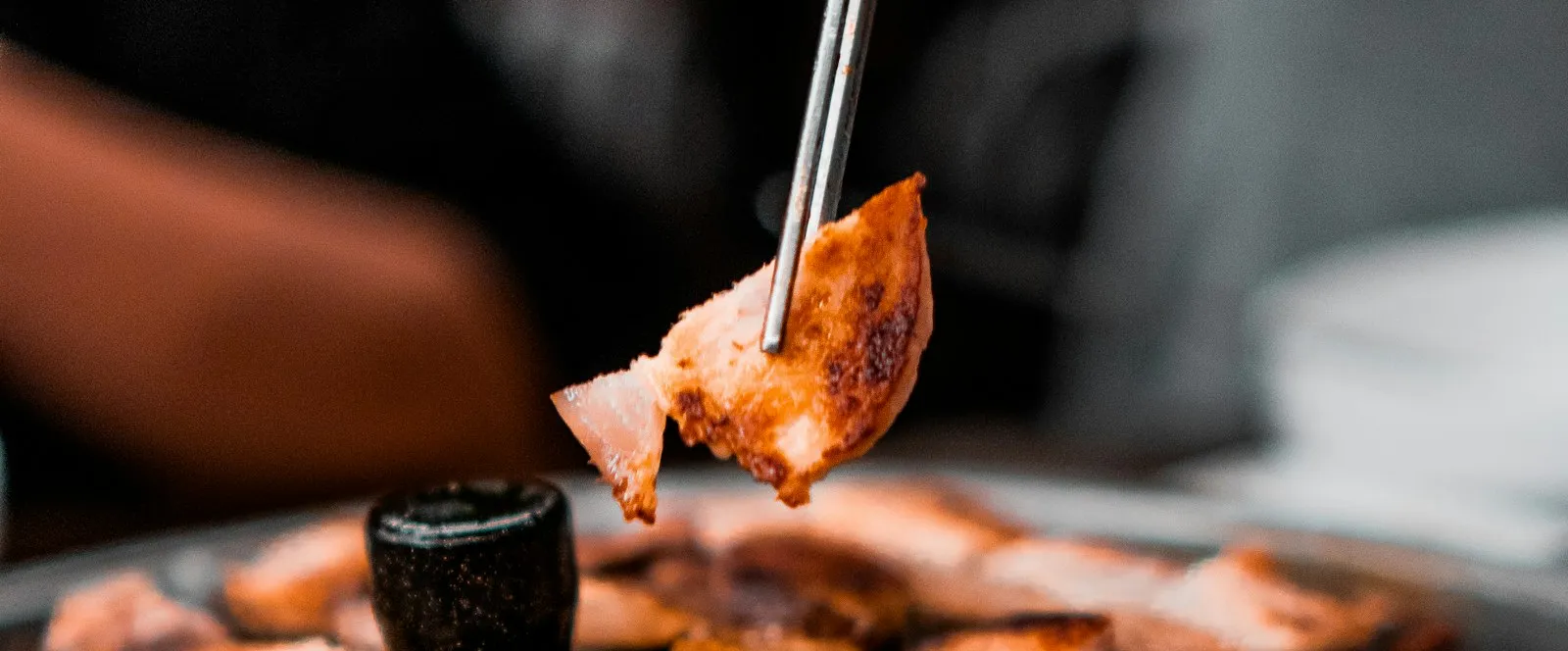
You sit down at a Korean barbecue restaurant in Seoul. There is a grill in the table, several small dishes arrive, and a menu may list different cuts of pork or beef by portion. Who orders first? Do you cook the meat yourself? Is the lettuce part of the meal?
You do not need to know every custom before enjoying Korean BBQ. The key is understanding what you are ordering, who controls the grill and which items are included. Restaurants differ, so the best first-timer habit is to check the actual menu and follow the staff’s instructions.
The Korea Tourism Organization’s Korean food guide describes meat restaurants, side dishes called banchan and lettuce or perilla-leaf wraps called ssam. It also notes that in some restaurants, staff cook the meat at the table. That last detail matters: there is no universal rule that customers must do all the grilling.
Choose your main meat before worrying about the side dishes
| Menu word | What it usually means | Useful question |
|---|---|---|
| Samgyeopsal (삼겹살) | Pork belly, often grilled without a sweet marinade | Is this plain pork belly, and how large is one portion? |
| Moksal / Moksimsal (목살) | Pork neck/shoulder area, a different texture from belly | Can we order different cuts together? |
| Galbi (갈비) | Ribs; may be beef or pork and may be marinated | Is this beef or pork? Is the seasoning spicy or sweet? |
| Yangnyeom galbi (양념갈비) | Seasoned or marinated ribs, often soy-based | What is in the marinade? |
KTO has individual descriptions of grilled pork belly and marinated beef galbi. However, a menu word alone does not tell you the restaurant’s exact recipe, country of meat origin, weight or price. Read the details on the menu rather than assuming that all galbi is beef or all meat is marinated.
For a first meal, one familiar cut and perhaps one different cut may be enough.
Before ordering, check the portion rules
Korean BBQ restaurants may list meat by portion, weight, set menu or price per person. Some set a minimum initial order, particularly for table-grill service. Others provide individual meals or smaller sets. Neither policy should be assumed at every restaurant.
Look for the amount next to the price and ask what a “serving” means. If you are dining alone, confirm that the restaurant accepts a solo BBQ order. For a mixed-diet group, ask about other menu items.
One useful line is: “How many portions are required to start?” It helps prevent ordering too much or misunderstanding a minimum.
Also check whether rice, stew, noodles or drinks are included. The bowls of banchan that arrive at many Korean meals do not mean every menu item is part of one fixed-price package.
What are all the little dishes on the table?
Those are banchan, side dishes that accompany a Korean meal. Depending on the restaurant, you may receive kimchi, seasoned vegetables, pickles or other small dishes. The selection can change with the house style and the day’s preparation.
There is no required order for eating banchan. Try kimchi with meat, eat vegetables separately, or make a wrap.
Do not assume every side dish can be refilled for free, or that every condiment is unlimited. Some restaurants offer self-service refill stations; others ask you to call staff; some items may be additional orders. The rule that matters is the one at the table in front of you.
Who cooks the meat?
At some restaurants, staff handle the grill, cut the meat and tell you when it is ready. At others, customers cook. You may also encounter a mix: staff begin the process and diners finish it. A recent Seoul Tourism restaurant listing explicitly identifies a BBQ restaurant where staff grill for customers—evidence that the service format varies rather than one standard applying everywhere.
When the raw meat arrives, pause and watch for staff direction. If someone is grilling for you, let them work. If it is self-service and you are unsure how to use the heat control or when the meat is ready, ask before adjusting the equipment.
Food safety is more important than copying a dramatic video. Keep utensils that have touched raw meat away from cooked food unless staff replace or clean them. Korea’s official Food Safety Korea guidance emphasizes separation of raw and cooked food and thorough cooking. Do not guess a cooking time from meat color in someone else’s photograph; thickness and cuts differ.
How to make a lettuce wrap (ssam)
If the restaurant provides fresh lettuce or perilla leaves, you can try a ssam:
- Take a leaf and hold it in one hand.
- Add a small piece of fully cooked meat.
- Add a little ssamjang (a savory chili-and-soybean paste) or another condiment if you like it.
- Fold the leaf around the filling and eat it as a comfortable bite.
You can add rice, garlic or vegetables when available, but you are not required to include everything. Ssamjang recipes can contain ingredients that matter to someone with soy, wheat or other allergies, so ask rather than assume. If wraps are not served, enjoy the grilled meat with the condiments provided.
KTO explains ssam and banchan as flexible parts of a Korean meal.
Practical restaurant manners for a comfortable meal
- Use the call bell if provided. Not every table has one, but it is common in Korean restaurants. Otherwise catch a server’s attention politely.
- Respect the grill space. Hot plates, tongs and small children are a combination that deserves care. Keep sleeves and bags away from the cooking area.
- Follow the venue’s refill system. If you do not know whether to request more banchan or get it yourself, ask.
- Check before ordering alcohol or extra sides. An appealing dish in a photograph may not be included in your meat order.
- Mind diet and allergens. Pork is common in Korean BBQ, and marinades, sauces, side dishes and shared cooking surfaces can contain unexpected ingredients. A vegetarian, halal or allergy-sensitive traveler should verify the restaurant’s actual practices, not infer suitability from a translated meat label.
Ask for help when you need it; there is no need to imitate every dining habit you see online.
What makes a first BBQ experience worth it?
For a beginner, clarity is valuable. A readable menu, understandable portions and a service style that suits your group can matter more than fame.
Before entering, check the menu, the minimum order and whether staff grill. Once seated, choose your meat, enjoy the banchan and try a wrap if you like. That is already a complete Korean BBQ experience—without an invented “best restaurant” ranking.
Editorial disclosure: This is a research-based explanation of Korean BBQ. The Worth-It Map has not inspected or eaten at any restaurant named by its sources for this article, verified a menu, or guaranteed free refills, minimum orders, prices, food safety, halal status or allergen handling.
Official sources
- Korea Tourism Organization — About Korean Food / Banchan, Ssam & BBQ — meal format and service variations. The source notes its own 2023 update date.
- KTO — Grilled Pork Belly / Samgyeopsal.
- KTO — Marinated Grilled Beef Galbi.
- Seoul Tourism — Example of a staff-grilled BBQ restaurant — illustrates service variation, not a recommendation or verified visit.
- Food Safety Korea — Preventing Foodborne Illness — handling raw and cooked foods separately, thorough cooking.