Research Guide
Seoul Transportation Cards for First-Time Visitors: What to Check Before Buying
T-money, single-journey tickets or a Seoul short-term Climate Card? Compare coverage, ticket types and top-up practicalities before buying.
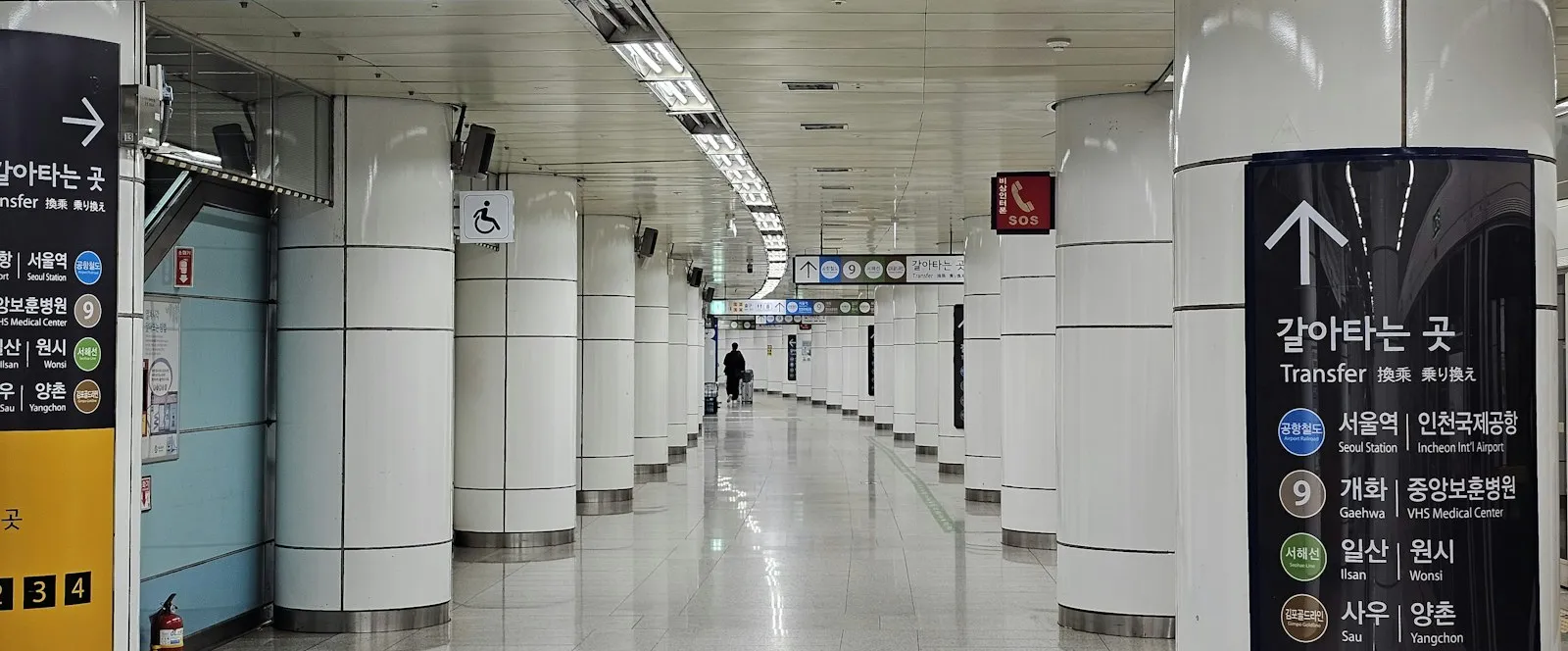
Seoul has a convenient transit network, but the payment choices can sound confusing before your first ride. You may see T-money, a single-journey subway ticket, and the Climate Card, sometimes described as a visitor pass. All three can help you get around, but they answer different questions.
Do not choose by the word “tourist” on a card. Ask: Where will I travel, on which transport, and how often? We focus on that decision, not changing fares.
Three choices, three different jobs
| Choice | What you are buying | A reasonable use case | Check before paying |
|---|---|---|---|
| T-money | A rechargeable transit-payment card | Mixed subway and bus travel; flexible itinerary | Accepted transport services, balance, where and how to reload |
| Single-journey subway ticket | One journey bought at a subway ticket machine | You need an occasional subway ride without a rechargeable card | Subway-only use; deposit/refund process where applicable |
| Climate Card short-term pass | A time-based pass for eligible covered Seoul transport | Several planned rides within its service coverage during a selected period | Eligible lines/stops, period start/end, physical card/app availability and recharge method |
Korea Tourism Organization’s official transportation-card guide lists T-money and Climate Card among visitor options. Seoul Metropolitan Government separately explains the single-journey subway system and the Climate Card rules. The names may be familiar, but the scope must be checked on current official pages before purchase.
When T-money is the simpler starting point
T-money is a stored-value payment card. You load a balance, tap as required by the transport system, and the appropriate fare is deducted. It is often a practical fit when you do not yet know how many subway and bus rides you will take or when your plans extend beyond a single Seoul-only area.
The Korea Tourism Organization explains that T-money is accepted on a broad range of public transport and at some participating merchants. However, “broad acceptance” does not mean that the card itself replaces every separately issued rail ticket, reserved-seat booking or private operator product. Do not assume an intercity train booking is complete just because you own a T-money card.
Before buying, identify a purchase point and a verified top-up method. A shop selling the card may not reload it with your overseas bank card. Keep a fallback payment method.
Worth it when: flexibility matters more than predicting a fixed number of rides.
When a Seoul short-term pass might be worth comparing
Seoul’s official Climate Card information confirms short-term pass periods of 1, 2, 3, 5 and 7 days. This is a different purchase from adding ordinary stored value to T-money. Its appeal is the pass model: eligible rides during a selected period, subject to the published service boundaries and card conditions.
That coverage condition is the essential detail. A route that looks like “Seoul travel” on your itinerary may cross a service boundary, involve a different operator or require a separate rail booking. Coverage has also been expanded and adjusted over time. Do not rely on a social post from an earlier year, and do not assume that the pass automatically covers your entire airport journey or every regional trip.
Open the city’s current Climate Card policy page and check your actual stations and bus services in both directions. Then consider whether you will use enough eligible rides to make a period pass sensible. A pass is not inherently better just because you are visiting for three days.
Worth considering when: you will make repeated journeys predominantly inside the published coverage area, and you can buy and activate the correct pass without difficulty.
When a single-journey ticket is enough
For a visitor taking just one or two subway rides, the station ticket machine may be the least complicated choice. Seoul Metropolitan Government explains that a single-journey ticket is for subway travel, not for buses. The official guidance also describes a ticket deposit and a refund machine; verify the current process on the machine where you purchase.
This is a useful fallback, not a substitute for every sort of city transport. If your route includes buses, you should plan how those rides will be paid for rather than expecting one subway ticket to work everywhere.
Worth it when: your immediate need is one subway journey and you are not ready to buy a reusable card.
Five checks before you spend money
1. Mark your actual trip on a map. Write down the neighborhoods, any journeys outside central Seoul and any separately ticketed trains. Decide first whether your transport is mostly local, partly regional or built around one or two trips.
2. Count likely eligible rides, not sightseeing days. Two people spending three days walking around one neighborhood may use less transit than someone making many cross-city trips in a day. For a time-based pass, compare the current pass price with the trips you genuinely expect to take; do not invent an “average tourist” ride count.
3. Distinguish the physical card from the product loaded on it. A card purchase, stored balance, and period pass may involve different steps. Read the official instructions for your chosen product rather than assuming all pink or blue transit cards behave alike.
4. Check how you will pay and reload. Seoul announced international-card payment support at selected modern ticket machines for short-term Climate Cards and single-journey tickets in 2026. That does not prove that every station machine, every product, or every foreign card works. Check the machine type and keep a payment alternative.
5. Understand tapping and the exit. Follow local signs and machine prompts. For buses, the city explains that riders use their transit cards when boarding and exiting, with transfer rules tied to proper use. If a journey appears to require a separate ticket, ask station staff before going through the gate.
What if you already bought the wrong product?
Pause before buying a second one. Check whether the problem is insufficient balance, an excluded line, an expired pass, or a mistaken ticket type. Those problems have different solutions. The city’s Climate Card guidance includes registration and refund conditions; some refund options differ for visitors without Korean bank accounts. Do not assume the remaining value can be returned at any shop.
For an immediate journey, staff at a staffed station information point may help you identify the correct ticket. Keep the original card and purchase record until you understand your options.
Our decision rule
Choose T-money when flexibility across ordinary city travel is your priority. Compare a short-term Climate Card when you have a Seoul-centered, ride-heavy itinerary and have checked the covered network. Use a single-journey ticket for an occasional subway trip. No card is a substitute for checking a service’s own ticket requirements.
The right choice is the one that matches your route and transport modes, not the one most often recommended in a short video.
Official references and information limits
- Korea Tourism Organization — Transportation Cards: official overview of T-money and other transport products.
- Seoul Metropolitan Government — Public Transportation: tapping, single-journey tickets, buses and visitor guidance.
- Seoul Metropolitan Government — Climate Card: current service coverage, pass types, charging and refund conditions.
- Seoul Metropolitan Government — International-card ticket machines: 2026 machine/payment rollout, not a universal acceptance guarantee.
Research reviewed: November 1, 2026. Fare tables, service-area boundaries, airport-rail products, purchase channels and refunds can change. We have not purchased or tested these cards in person for this article.